

Material grade · 304
Stainless Steel 304
Last updated October 13, 2026
A widely used stainless grade offering corrosion resistance and practical fabrication characteristics.
Overview
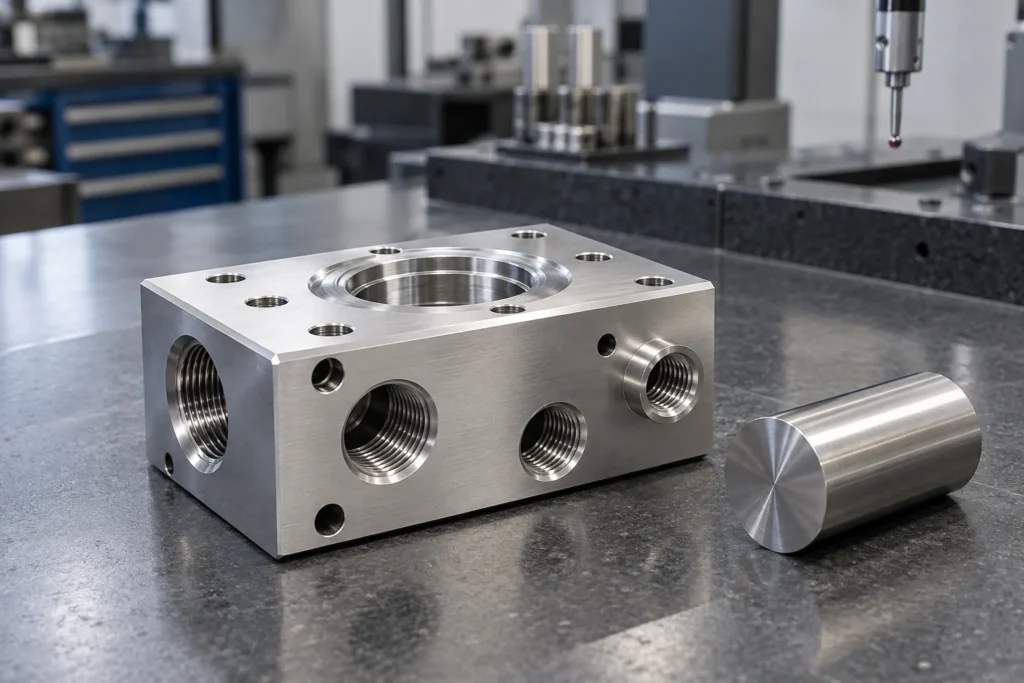
304 is an austenitic chromium-nickel stainless steel used for corrosion-resistant equipment, housings, brackets, fasteners and fluid-handling components. It combines formability and weldability with a cleanable surface, while remaining non-hardenable by conventional heat treatment.
Product form and specification matter: sheet, plate and bar may be ordered to different standards and property tables. Cold work can increase strength and magnetic response. Corrosion performance depends on surface condition and environment; 304 is not automatically suitable for chloride-intensive service.
Scope note: This article explains general material behavior. It is not a statement that every form, temper or grade is held in stock. AYBERK confirms sourcing, process capability and project requirements through manual RFQ review.
Material characteristics
Drawing-led selection
Material is reviewed against function, environment and finishing requirements.
Machining review
Geometry and critical features guide tools, workholding and process planning.
Traceable specification
Customers should state the required grade and any documentation needs on the RFQ.
Technical properties
Use values only with the stated alloy condition, product form and source standard. Blank values are intentionally not inferred.
General properties
- DesignationASTM A240 for sheet/plate or ASTM A276 for bar as applicable; EN 10088 equivalents require explicit approval
- 304
- Reference condition / formConfirm on purchase specification and drawing
- Annealed or product-specific cold-worked condition
Physical properties
- Reference densityTypical handbook or supplier-datasheet value; not an acceptance limit
- approximately 8.0 g/cm³
- Physical-property interpretationUse the selected grade datasheet for design calculations
- Lower thermal conductivity and higher thermal expansion than carbon steel influence heat control, welding and dimensional planning.
Mechanical properties
- Mechanical-property interpretationCondition, thickness and test method must be stated
- Use the property table for the ordered product form and condition; cold work and thickness affect results.
Chemical / composition data
- Composition controlASTM A240 for sheet/plate or ASTM A276 for bar as applicable; EN 10088 equivalents require explicit approval
- 304 is an iron-based austenitic stainless grade with chromium and nickel as key alloying elements. Carbon and other elements are limited by the selected standard.
Machinability and process notes
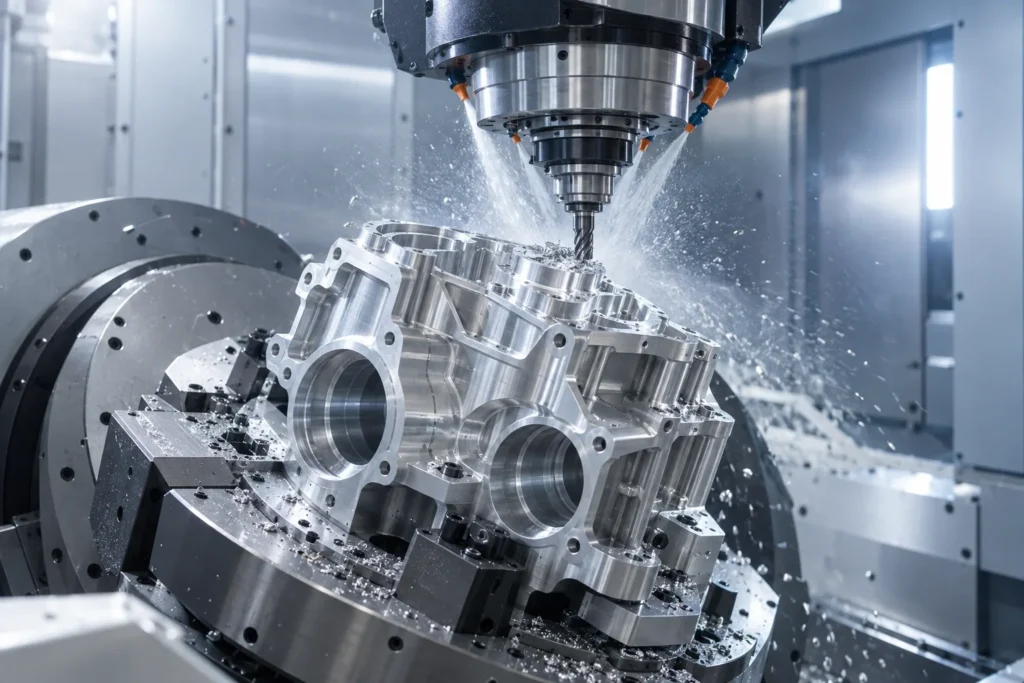
304 tends to work-harden and generate heat. Rigid setups, positive cutting action, controlled engagement and effective coolant help avoid rubbing. Burr formation and stringy chips require attention, especially around drilled and threaded features.
Avoid light dwelling cuts, minimize unnecessary tool overhang and plan deburring access. For sheet parts, allow for springback and protect visible surfaces during cutting and forming.
Final feeds, speeds, tooling, coolant, workholding and inspection are process decisions made from the drawing and the verified stock. General guidance here does not replace a project-specific manufacturing review.
Typical applications
Precision components
Drawing-led parts for industrial and engineering programs.
Prototype validation
Functional parts for fit, assembly and performance review.
Repeat production
Documented batches with consistent process planning.
Surface finishing compatibility
Passivation
Specify the governing procedure and pre-cleaning requirements.
Brushed / polished
Define grain, roughness or visual sample and protected faces.
As-machined
Deburr and remove contamination; final corrosion behavior depends on surface condition.
Advantages and limitations
Advantages
Broad corrosion resistance, clean appearance, weldability and availability in many forms make 304 a widely considered stainless grade.
Limitations
Machining is slower than common aluminum and free-machining steels, chloride resistance is limited, and distortion or cosmetic marking can require additional control.
Design considerations
Define product form, finish, grain direction where cosmetic, weld condition and any passivation requirement. Isolate stainless from carbon-steel contamination during handling and finishing.
Where properties are safety-critical, specify the governing standard, lot documentation and required test evidence. Dimensional and cosmetic requirements should be separated so they can be inspected at the correct production stage.
Material composition and specification
304 is an iron-based austenitic stainless grade with chromium and nickel as key alloying elements. Carbon and other elements are limited by the selected standard.
Reference framework: ASTM A240 for sheet/plate or ASTM A276 for bar as applicable; EN 10088 equivalents require explicit approval The purchase document and material certificate govern; this overview is not a certificate of conformity.
CNC machining recommendations
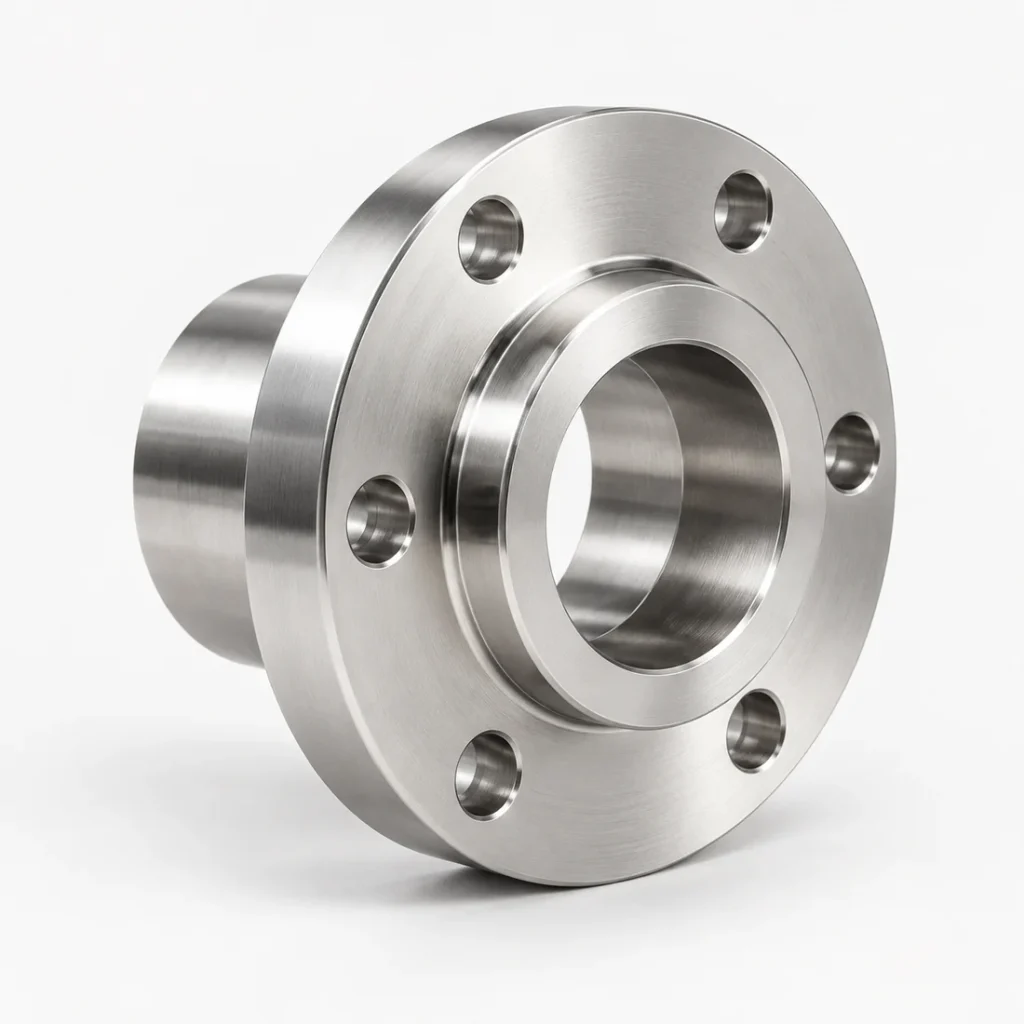
Avoid light dwelling cuts, minimize unnecessary tool overhang and plan deburring access. For sheet parts, allow for springback and protect visible surfaces during cutting and forming.
Geometry-specific decisions include stock allowance, support, cutter reach, burr control, thermal management and the point at which critical dimensions are verified. Share expected quantity and finishing requirements with the drawing.
Material selection guidance
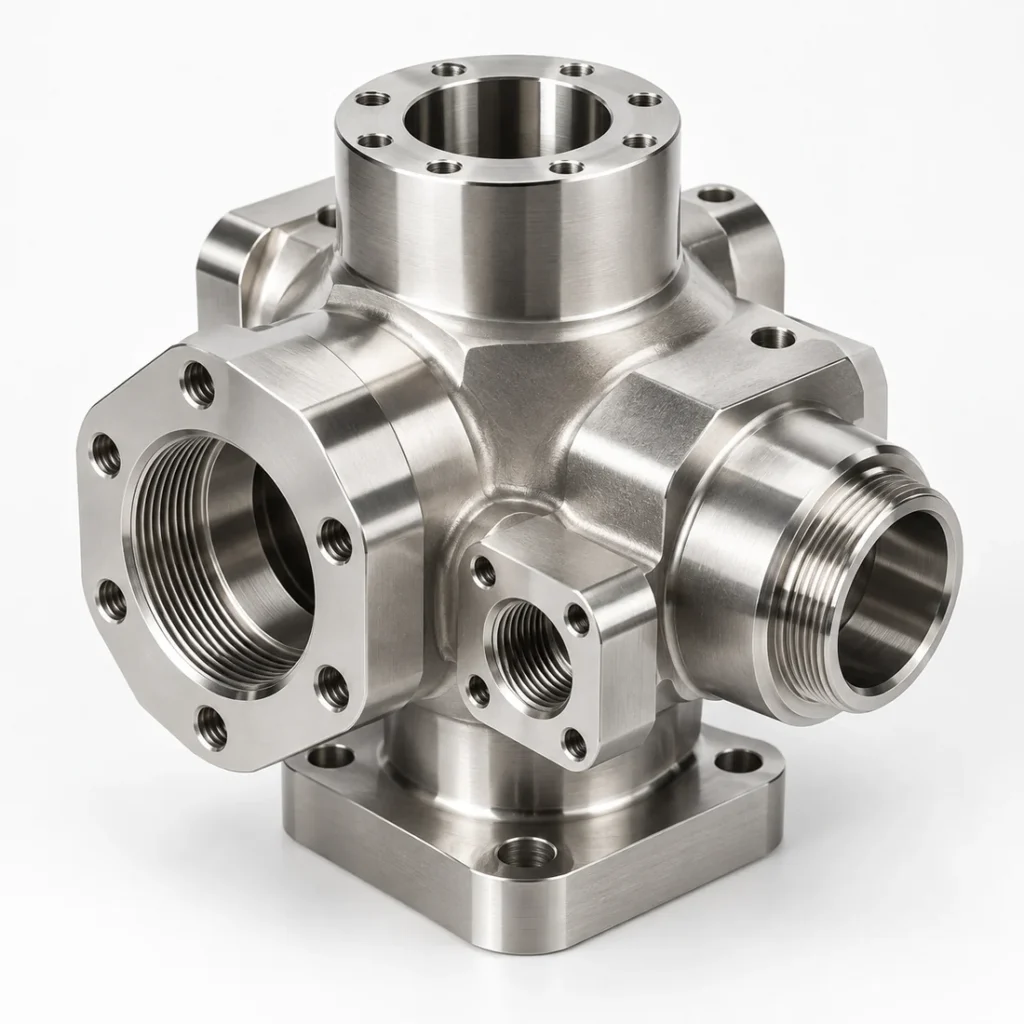
Choose 304 for general corrosion-resistant parts when chloride exposure and very high strength are not dominant. Compare 201 for cost-sensitive formed sheet after corrosion review and other stainless grades for harsher environments.
If an alternative is acceptable, state the performance priorities instead of naming an uncontrolled substitute. Any alternative remains subject to customer approval.
Material and part gallery
Need parts machined from Stainless Steel 304?
Send the drawing, material standard, condition and quantity. AYBERK will confirm availability and provide a manual quotation.
Request a Quote