

Material grade · FR4
FR4
Last updated October 12, 2026
Technical machining guidance for FR-4 glass-reinforced epoxy laminate used in electrical, fixture and structural-insulation applications.
Overview
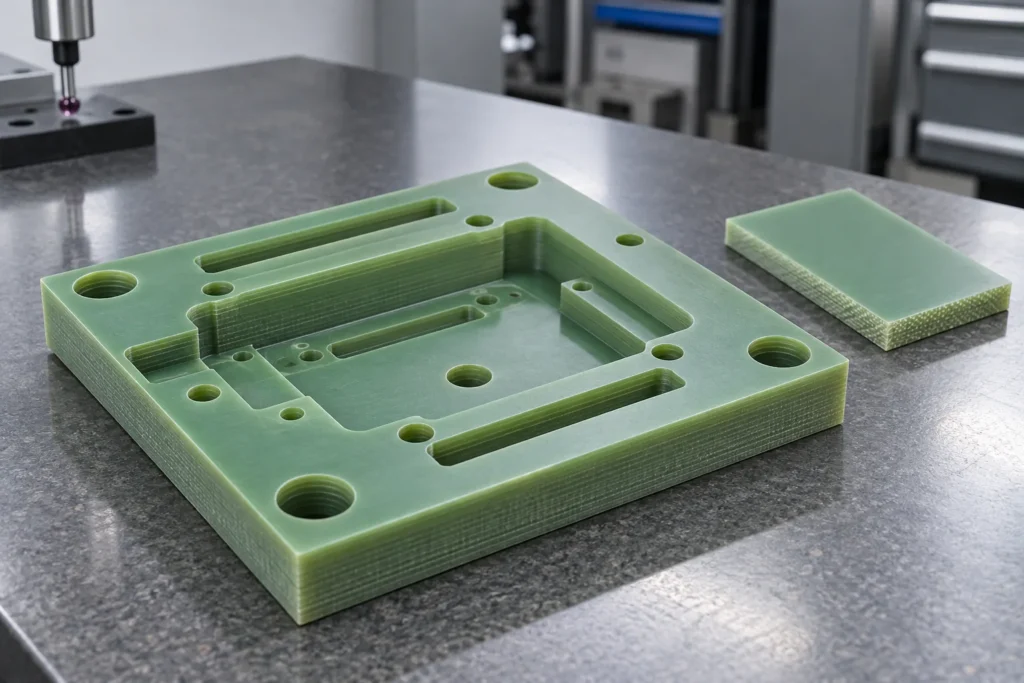
FR-4 is a flame-retardant glass-fabric reinforced epoxy laminate family widely associated with printed-circuit substrates and electrical insulation. Machined plate may also be used for fixtures, supports and insulating structures.
FR-4 is abrasive and anisotropic. Dust control, tool wear and edge delamination are central production issues. Electrical, thermal and flame performance depend on laminate construction, resin system, thickness and applicable specification.
Scope note: This article explains general material behavior. It is not a statement that every form, temper or grade is held in stock. AYBERK confirms sourcing, process capability and project requirements through manual RFQ review.
Material characteristics
Electrical insulation
Useful where the specified laminate meets dielectric and flame requirements.
Rigid composite plate
Provides stiffness with direction-dependent behavior.
Abrasive machining
Glass reinforcement accelerates tool wear and creates hazardous fine dust requiring extraction.
Technical properties
Use values only with the stated alloy condition, product form and source standard. Blank values are intentionally not inferred.
General properties
- DesignationSpecify laminate construction and supplier data; electrical laminates may reference NEMA LI 1 or IPC-4101
- FR-4 laminate
- Reference condition / formConfirm on purchase specification and drawing
- Laminate construction, thickness and copper-clad/bare state confirmed
Physical properties
- Reference densityTypical handbook or supplier-datasheet value; not an acceptance limit
- typically about 1.8–2.0 g/cm³, construction-dependent
- Physical-property interpretationUse the selected grade datasheet for design calculations
- Electrical and thermal values are construction- and frequency-dependent; use the supplier datasheet for design.
Mechanical properties
- Mechanical-property interpretationCondition, thickness and test method must be stated
- Flexural and dimensional behavior differs by direction, thickness, temperature and moisture conditioning.
Chemical / composition data
- Composition controlSpecify laminate construction and supplier data; electrical laminates may reference NEMA LI 1 or IPC-4101
- FR-4 combines woven glass reinforcement with a flame-retardant epoxy resin system. Glass style, resin content and additives vary by laminate grade.
Machinability and process notes
Use suitable wear-resistant tooling, stable backing and controlled entry/exit to reduce splintering. Effective dust extraction and occupational controls are mandatory; conventional coolant assumptions may not apply.
Increase edge distance around holes, avoid sharp internal corners and define acceptable exposed fibers or edge sealing. Treat copper-clad laminate as a different process case.
Final feeds, speeds, tooling, coolant, workholding and inspection are process decisions made from the drawing and the verified stock. General guidance here does not replace a project-specific manufacturing review.
Typical applications
Electrical insulation plates
Supports and barriers with specified dielectric requirements.
PCB tooling
Fixtures, carriers and process plates with controlled cleanliness.
Composite machine parts
Low-volume structural-insulating details within laminate limits.
Surface finishing compatibility
As-machined edge
Define burr, fiber breakout and cleanliness acceptance.
Edge sealing
Project-specific compatible sealant may reduce moisture ingress or loose fibers.
Marking
Use methods compatible with the resin system and cleanliness requirement.
Advantages and limitations
Advantages
Electrical insulation, flame-rated families, stiffness and dimensional usefulness across many electronic applications.
Limitations
Abrasive dust, tool wear, anisotropy, delamination risk and grade-specific electrical performance require controlled handling.
Design considerations
State the laminate specification, thickness, construction, copper condition, flame requirement and critical electrical surfaces. Define dust-cleanliness expectations.
Where properties are safety-critical, specify the governing standard, lot documentation and required test evidence. Dimensional and cosmetic requirements should be separated so they can be inspected at the correct production stage.
Material composition and specification
FR-4 combines woven glass reinforcement with a flame-retardant epoxy resin system. Glass style, resin content and additives vary by laminate grade.
Reference framework: Specify laminate construction and supplier data; electrical laminates may reference NEMA LI 1 or IPC-4101 The purchase document and material certificate govern; this overview is not a certificate of conformity.
CNC machining recommendations
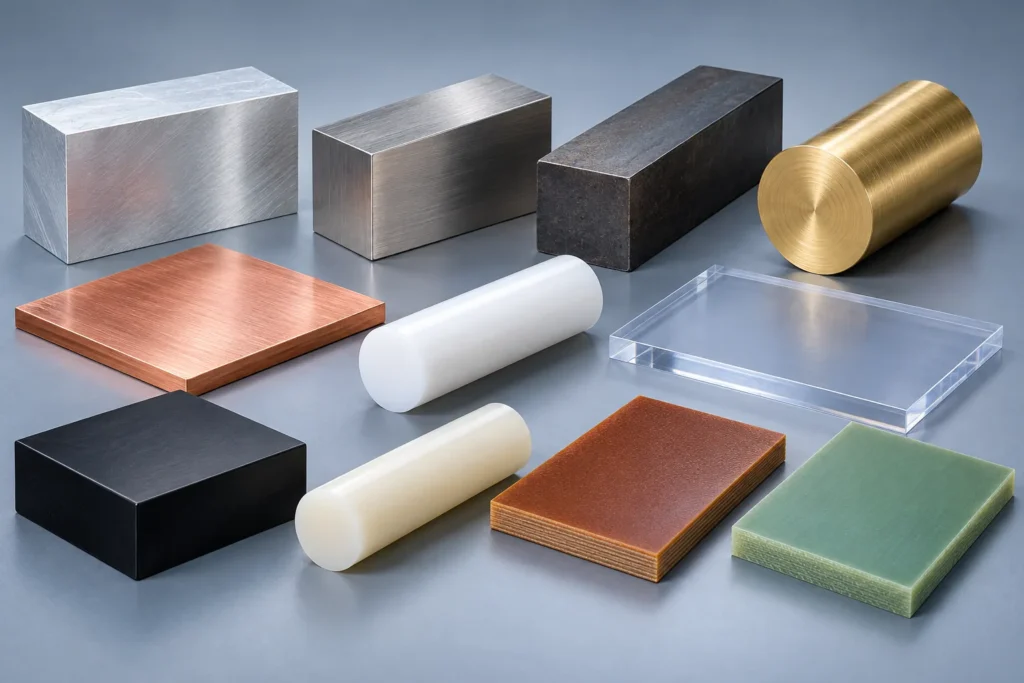
Increase edge distance around holes, avoid sharp internal corners and define acceptable exposed fibers or edge sealing. Treat copper-clad laminate as a different process case.
Geometry-specific decisions include stock allowance, support, cutter reach, burr control, thermal management and the point at which critical dimensions are verified. Share expected quantity and finishing requirements with the drawing.
Material selection guidance
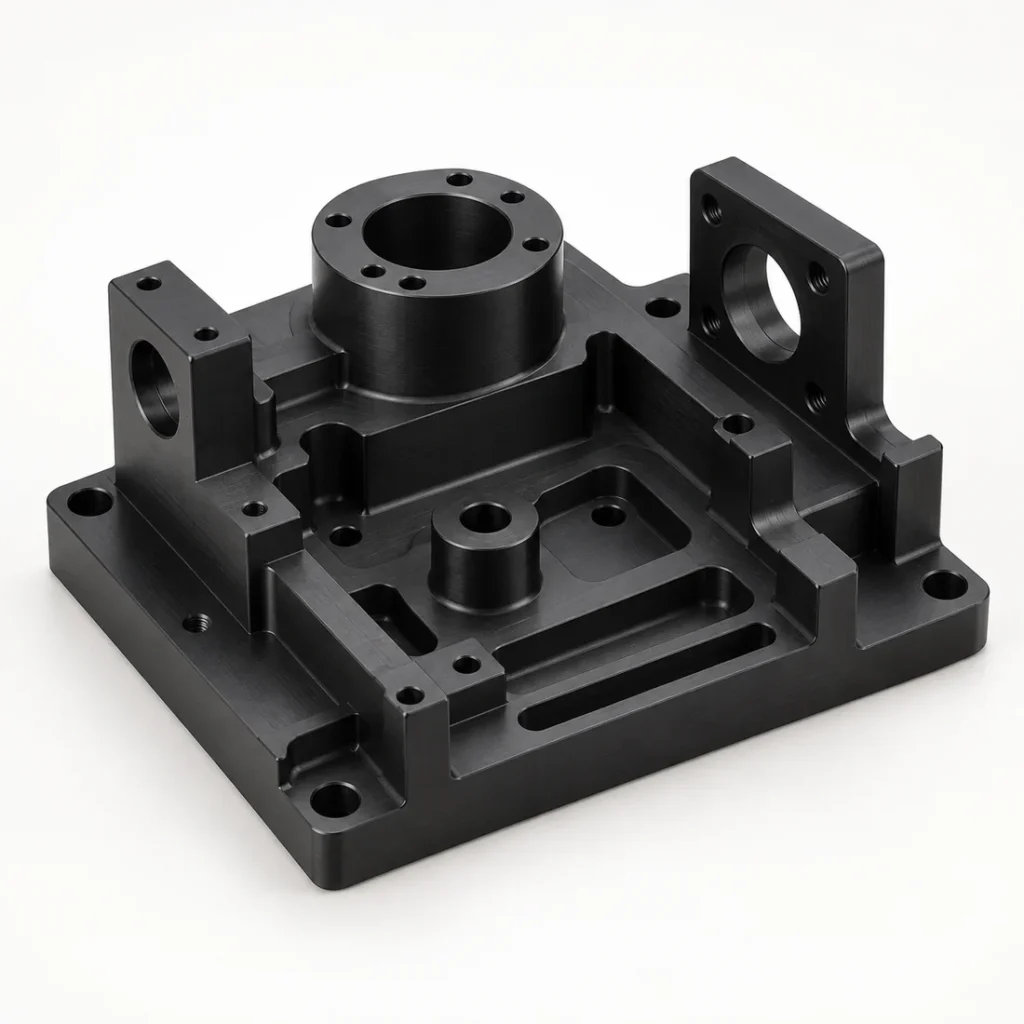
Choose FR-4 for structural electrical insulation when the certified laminate construction meets the requirement. Compare phenolic laminate for different cost and insulation needs or engineering plastics for noncomposite machining.
If an alternative is acceptable, state the performance priorities instead of naming an uncontrolled substitute. Any alternative remains subject to customer approval.
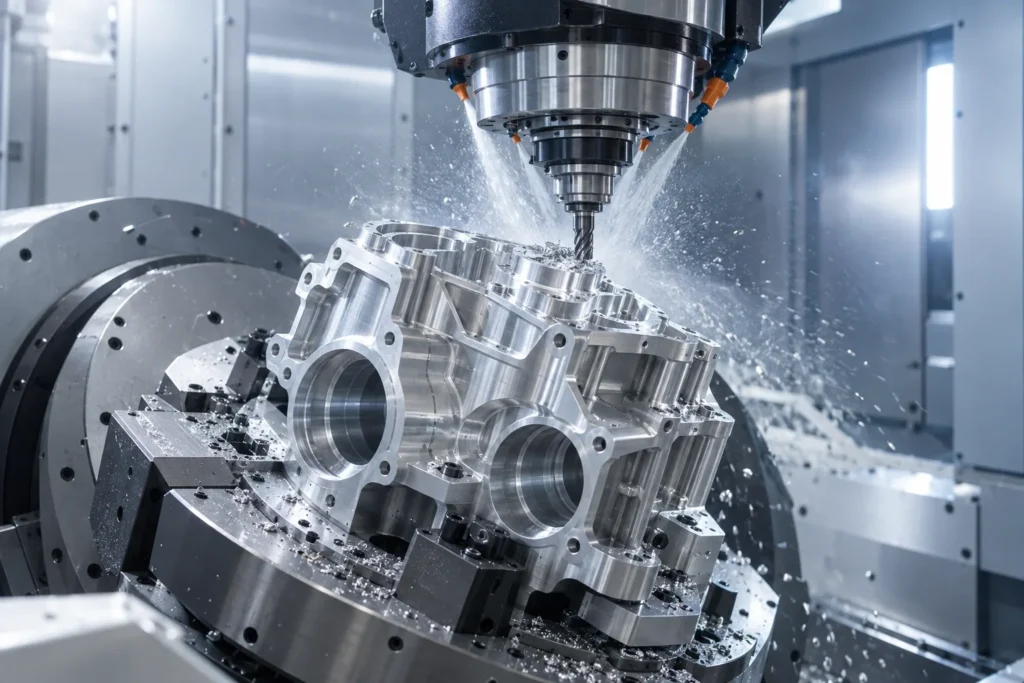
Material and part gallery
Discuss FR4 for your project
Send the drawing, material standard, condition and quantity. AYBERK will confirm availability and provide a manual quotation.
Request a Quote