


Material grade · POM
POM
Last updated October 12, 2026
An engineering plastic suited to low-friction, dimensionally stable functional parts.
Overview
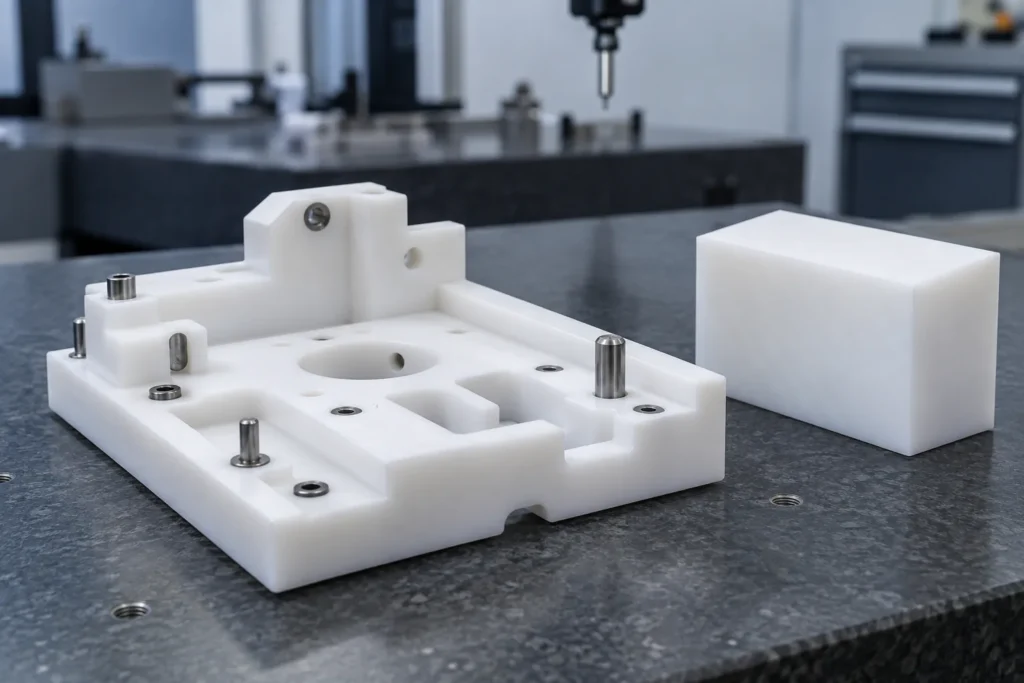
Polyoxymethylene, commonly called POM or acetal, is an engineering thermoplastic valued for low friction, good wear behavior and comparatively stable dimensions. Homopolymer and copolymer grades differ, and additives can change friction, color, conductivity or regulatory status.
POM is often evaluated for bushings, guides, gears, fixtures and precision plastic mechanisms. It remains sensitive to heat, clamping pressure and internal stress. The exact resin grade and stock producer data are more important than a generic polymer name.
Scope note: This article explains general material behavior. It is not a statement that every form, temper or grade is held in stock. AYBERK confirms sourcing, process capability and project requirements through manual RFQ review.
Material characteristics
Drawing-led selection
Material is reviewed against function, environment and finishing requirements.
Machining review
Geometry and critical features guide tools, workholding and process planning.
Traceable specification
Customers should state the required grade and any documentation needs on the RFQ.
Technical properties
Use values only with the stated alloy condition, product form and source standard. Blank values are intentionally not inferred.
General properties
- DesignationSpecify manufacturer grade and stock datasheet; generic classification may reference ISO 9988
- POM
- Reference condition / formConfirm on purchase specification and drawing
- Extruded or cast stock, grade and conditioning confirmed
Physical properties
- Reference densityTypical handbook or supplier-datasheet value; not an acceptance limit
- typically about 1.41 g/cm³, grade-dependent
- Physical-property interpretationUse the selected grade datasheet for design calculations
- Low moisture uptake relative to nylon supports stability, but thermal expansion is far higher than metals.
Mechanical properties
- Mechanical-property interpretationCondition, thickness and test method must be stated
- Modulus, strength and impact values depend on resin family, additives, temperature and test conditioning.
Chemical / composition data
- Composition controlSpecify manufacturer grade and stock datasheet; generic classification may reference ISO 9988
- POM is an acetal polymer available as homopolymer and copolymer families with optional additives. Resin trade names are not interchangeable without approval.
Machinability and process notes
Sharp polished tools, low cutting heat and chip clearance help prevent melting or smeared edges. Clamps should distribute load, and thin sections may relax after heavy stock removal.
Use radiused transitions, avoid metal-like press fits without thermal analysis and allow realistic tolerances for service temperature. Deburr without overheating the edge.
Final feeds, speeds, tooling, coolant, workholding and inspection are process decisions made from the drawing and the verified stock. General guidance here does not replace a project-specific manufacturing review.
Typical applications
Precision components
Drawing-led parts for industrial and engineering programs.
Prototype validation
Functional parts for fit, assembly and performance review.
Repeat production
Documented batches with consistent process planning.
Surface finishing compatibility
As-machined
Usually preferred; control tool marks, burrs and edge breaks.
Polished functional surface
Possible for selected areas, with dimension and heat carefully managed.
Marking
Mechanical or laser marking depends on grade and contrast requirement.
Advantages and limitations
Advantages
Low friction, good wear behavior, electrical insulation and useful dimensional stability for an engineering plastic.
Limitations
Thermal expansion, creep, flammability and chemical compatibility limit direct substitution for metal. Bonding can be difficult.
Design considerations
Specify homopolymer or copolymer and any food, color, static or wear grade. Consider creep under sustained load and allow clearances across the operating temperature.
Where properties are safety-critical, specify the governing standard, lot documentation and required test evidence. Dimensional and cosmetic requirements should be separated so they can be inspected at the correct production stage.
Material composition and specification
POM is an acetal polymer available as homopolymer and copolymer families with optional additives. Resin trade names are not interchangeable without approval.
Reference framework: Specify manufacturer grade and stock datasheet; generic classification may reference ISO 9988 The purchase document and material certificate govern; this overview is not a certificate of conformity.
CNC machining recommendations
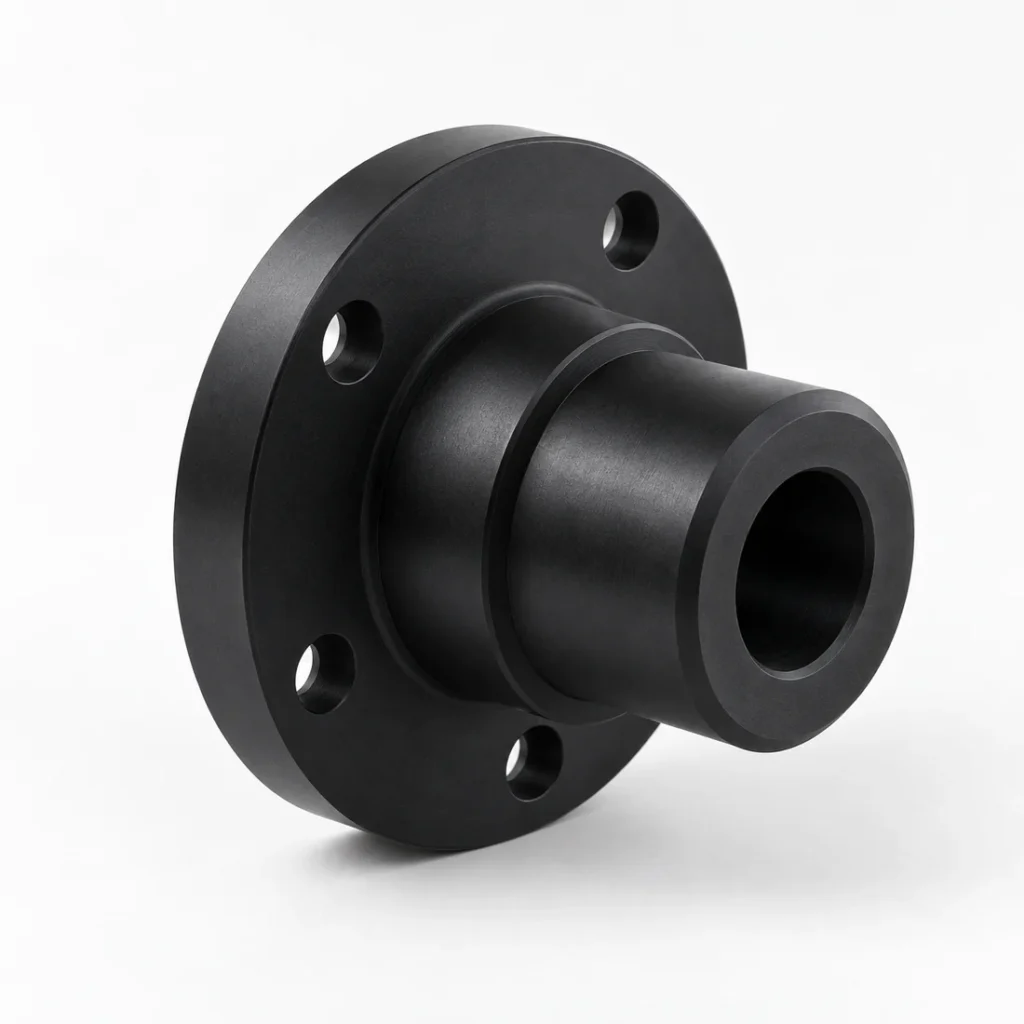
Use radiused transitions, avoid metal-like press fits without thermal analysis and allow realistic tolerances for service temperature. Deburr without overheating the edge.
Geometry-specific decisions include stock allowance, support, cutter reach, burr control, thermal management and the point at which critical dimensions are verified. Share expected quantity and finishing requirements with the drawing.
Material selection guidance
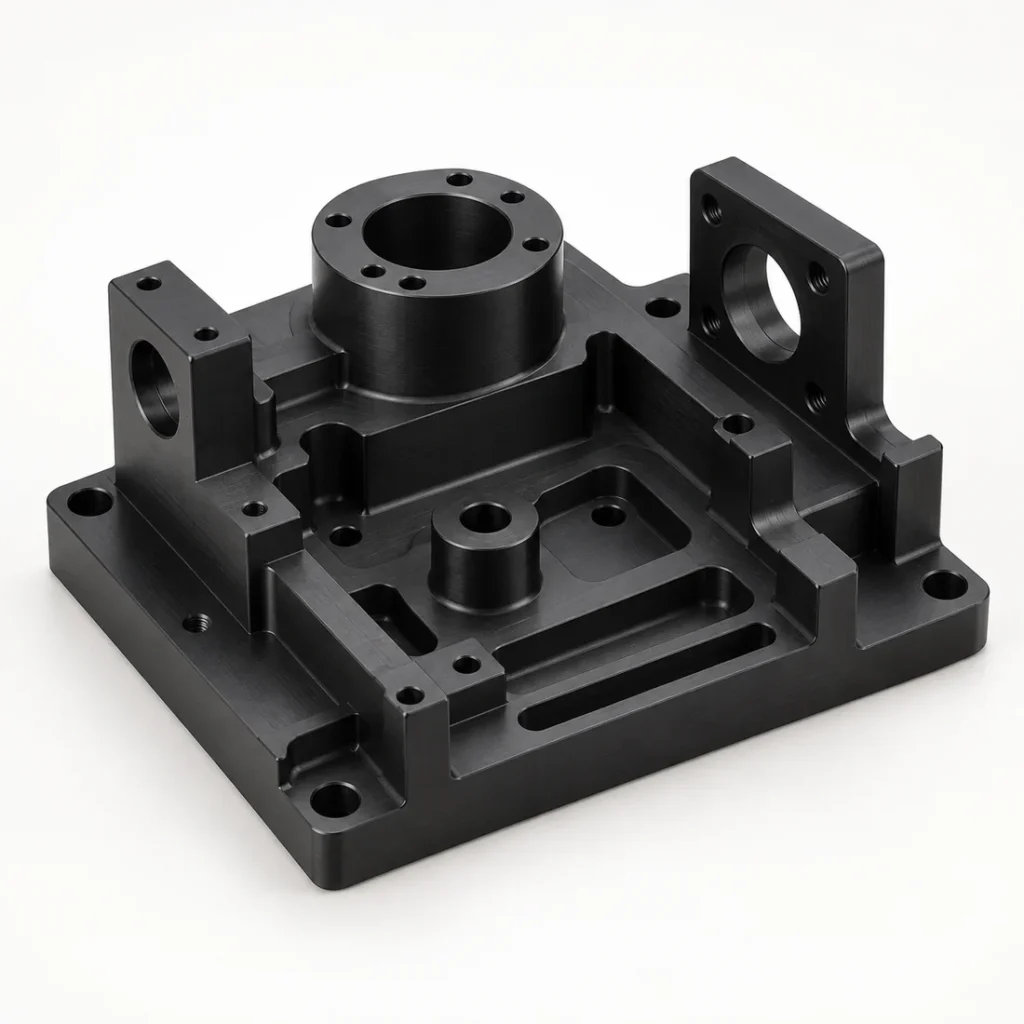
Choose POM for low-friction precision plastic parts in moderate environments. Compare PA6 for toughness and load capability, PC for impact and transparency, and metal where stiffness or temperature dominates.
If an alternative is acceptable, state the performance priorities instead of naming an uncontrolled substitute. Any alternative remains subject to customer approval.

Material and part gallery
Need parts machined from POM?
Send the drawing, material standard, condition and quantity. AYBERK will confirm availability and provide a manual quotation.
Request a Quote