


Material grade · Cold Rolled Steel
Cold Rolled Steel
Last updated October 12, 2026
Fabrication guidance for cold-rolled steel sheet used in formed, welded and coated industrial components.
Overview
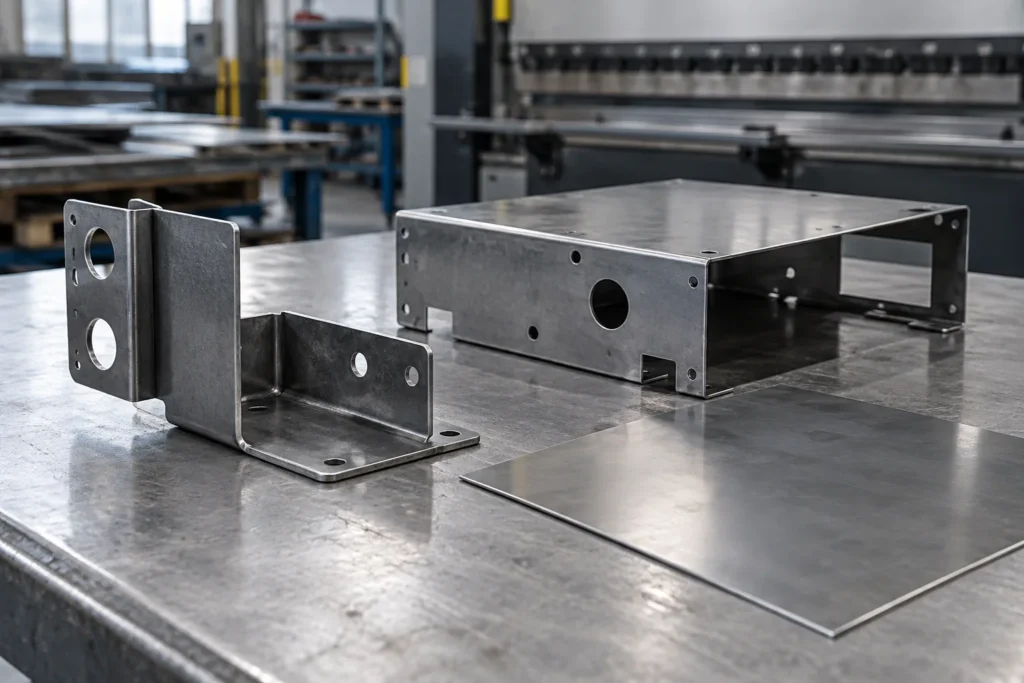
Cold-rolled steel describes a family of sheet products finished by cold reduction for controlled thickness and surface. Low-carbon drawing and commercial-quality grades are commonly considered for panels, brackets, chassis and enclosures that will receive paint, powder coat or plating.
The phrase is not a complete grade. The drawing should name a standard and grade, thickness, surface condition and any forming requirement. Mechanical properties differ between commercial, drawing and high-strength products.
Scope note: This article explains general material behavior. It is not a statement that every form, temper or grade is held in stock. AYBERK confirms sourcing, process capability and project requirements through manual RFQ review.
Material characteristics
Controlled sheet surface
Suitable for painted or coated fabricated products when surface grade is defined.
Formable grades available
Drawing quality must match bend depth and geometry.
Requires corrosion protection
Bare surfaces can rust during storage and service.
Technical properties
Use values only with the stated alloy condition, product form and source standard. Blank values are intentionally not inferred.
General properties
- DesignationASTM A1008/A1008M or EN 10130 as explicitly selected; do not mix standards without approval
- Cold-rolled low-carbon sheet
- Reference condition / formConfirm on purchase specification and drawing
- Grade, drawing quality, thickness and surface finish confirmed
Physical properties
- Reference densityTypical handbook or supplier-datasheet value; not an acceptance limit
- approximately 7.85 g/cm³
- Physical-property interpretationUse the selected grade datasheet for design calculations
- Typical carbon-steel density and thermal behavior; uncoated material is susceptible to corrosion.
Mechanical properties
- Mechanical-property interpretationCondition, thickness and test method must be stated
- Yield, tensile and elongation requirements depend on named grade and thickness, not the phrase cold rolled alone.
Chemical / composition data
- Composition controlASTM A1008/A1008M or EN 10130 as explicitly selected; do not mix standards without approval
- Cold-rolled sheet is generally iron-based low-carbon steel with chemistry controlled by the selected commercial, drawing or structural grade.
Machinability and process notes
Cutting and forming depend on grade and thickness. Burr orientation, bend radius, grain direction, springback and welded distortion are reviewed as part of fabrication planning.
Name the standard grade, keep holes away from bends, add bend relief and identify weld and coating surfaces. Protect bare stock between operations.
Final feeds, speeds, tooling, coolant, workholding and inspection are process decisions made from the drawing and the verified stock. General guidance here does not replace a project-specific manufacturing review.
Typical applications
Chassis and enclosures
Painted or powder-coated equipment structures.
Brackets and frames
Formed supports and welded subassemblies.
Panels and covers
Economical sheet components with defined cosmetic coating.
Surface finishing compatibility
Powder coating
Define pretreatment, color, texture, mask and film thickness.
Zinc plating
Specify system, thickness and corrosion test where required.
Paint / e-coat
Select pretreatment and coverage for the service environment.
Advantages and limitations
Advantages
Cost-effective sheet form, consistent thickness and a surface suitable for controlled coatings.
Limitations
No inherent corrosion resistance, grade ambiguity if specification is incomplete, and distortion risk during welding or heavy forming.
Design considerations
Specify standard, grade, thickness, surface quality, bend radii, weld symbols and finish. Include coating allowance at mating holes and grounding points.
Where properties are safety-critical, specify the governing standard, lot documentation and required test evidence. Dimensional and cosmetic requirements should be separated so they can be inspected at the correct production stage.
Material composition and specification
Cold-rolled sheet is generally iron-based low-carbon steel with chemistry controlled by the selected commercial, drawing or structural grade.
Reference framework: ASTM A1008/A1008M or EN 10130 as explicitly selected; do not mix standards without approval The purchase document and material certificate govern; this overview is not a certificate of conformity.
CNC machining recommendations
Name the standard grade, keep holes away from bends, add bend relief and identify weld and coating surfaces. Protect bare stock between operations.
Geometry-specific decisions include stock allowance, support, cutter reach, burr control, thermal management and the point at which critical dimensions are verified. Share expected quantity and finishing requirements with the drawing.
Material selection guidance
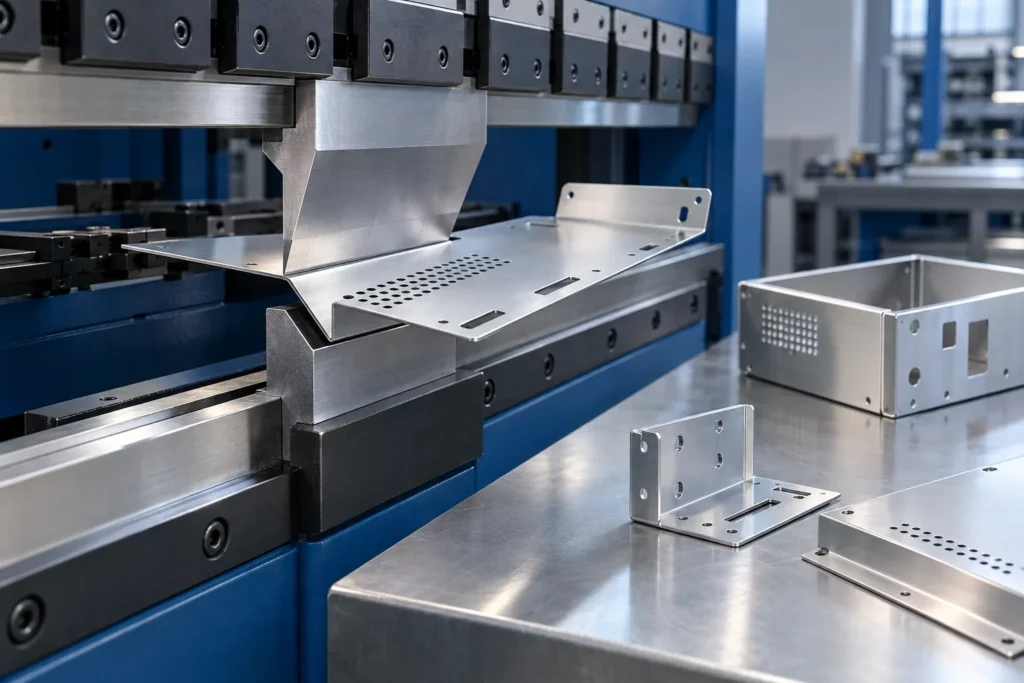
Choose cold-rolled steel when strength, cost and coating compatibility fit the design. Compare galvanized sheet for pre-coated corrosion protection and stainless for uncoated corrosion resistance.
If an alternative is acceptable, state the performance priorities instead of naming an uncontrolled substitute. Any alternative remains subject to customer approval.
Material and part gallery
Discuss Cold Rolled Steel for your project
Send the drawing, material standard, condition and quantity. AYBERK will confirm availability and provide a manual quotation.
Request a Quote