


Material grade · 45#
45# Steel
Last updated October 12, 2026
A practical guide to Chinese grade 45 medium-carbon steel for shafts, machine parts, heat treatment and CNC machining.
Overview
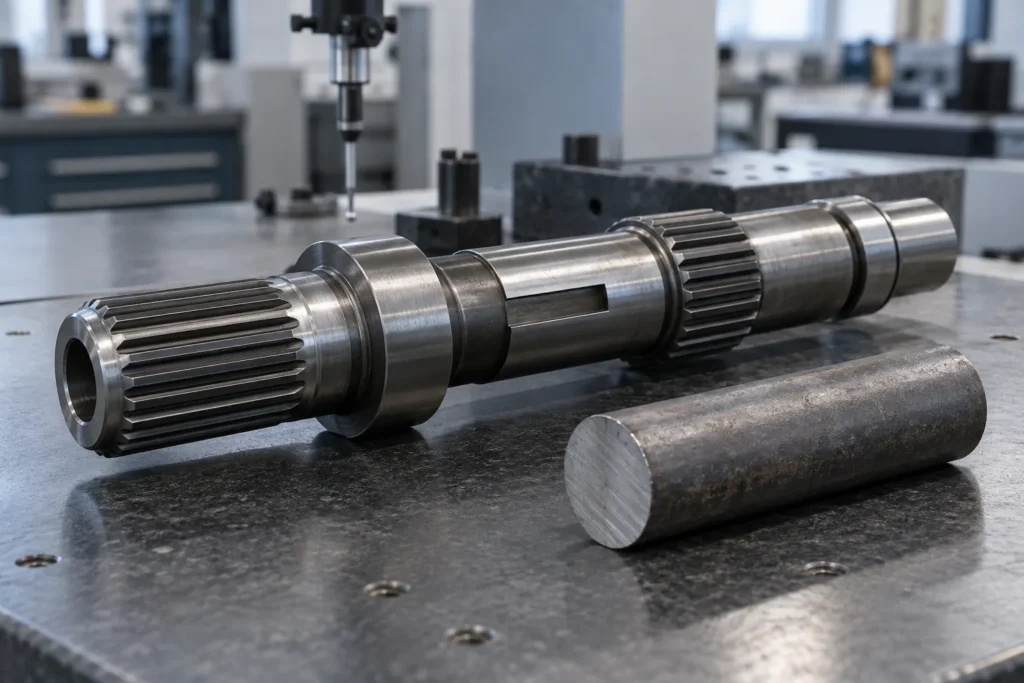
Grade 45 steel under GB/T 699 is a medium-carbon quality carbon structural steel commonly evaluated for shafts, pins, gears, sleeves and general machine components. It can be supplied and heat treated in different conditions, producing substantially different hardness, strength and machinability.
The designation must not be treated as automatically interchangeable with an international grade. If a drawing permits an equivalent, the chemistry, properties, heat-treatment route and certification should be reviewed explicitly. Final performance often depends as much on heat treatment and section size as on the nominal grade.
Scope note: This article explains general material behavior. It is not a statement that every form, temper or grade is held in stock. AYBERK confirms sourcing, process capability and project requirements through manual RFQ review.
Material characteristics
Heat-treatable
Can achieve different strength and hardness levels through an approved thermal route.
General machine-component use
Often considered for shafts, pins and load-bearing mechanical parts.
Corrosion protection needed
Unprotected carbon steel can rust; finishing and storage protection should match the environment.
Technical properties
Use values only with the stated alloy condition, product form and source standard. Blank values are intentionally not inferred.
General properties
- DesignationGB/T 699 quality carbon structural steels; any cross-standard equivalence requires customer approval
- 45
- Reference condition / formConfirm on purchase specification and drawing
- Hot rolled, normalized, annealed or quenched-and-tempered as specified
Physical properties
- Reference densityTypical handbook or supplier-datasheet value; not an acceptance limit
- approximately 7.85 g/cm³
- Physical-property interpretationUse the selected grade datasheet for design calculations
- Density and thermal behavior are typical of carbon steel; dimensional response during heat treatment depends on geometry and process.
Mechanical properties
- Mechanical-property interpretationCondition, thickness and test method must be stated
- Mechanical properties change markedly with heat treatment, section size and sampling. Use the drawing-specified condition and report.
Chemical / composition data
- Composition controlGB/T 699 quality carbon structural steels; any cross-standard equivalence requires customer approval
- Grade 45 is an iron-carbon steel with controlled manganese, silicon, phosphorus and sulfur limits defined by GB/T 699. Certified heat chemistry governs acceptance.
Machinability and process notes
Machinability depends strongly on supplied hardness and microstructure. Annealed or normalized stock is generally easier to cut than hardened condition. Heat treatment after roughing may require finish allowance and a second machining or grinding stage.
Define the condition before choosing tools or allowances. Use practical radii at shoulders, avoid abrupt section changes around heat-treated areas and identify surfaces that must be finished after thermal processing.
Final feeds, speeds, tooling, coolant, workholding and inspection are process decisions made from the drawing and the verified stock. General guidance here does not replace a project-specific manufacturing review.
Typical applications
Shafts and pins
Rotational or locating parts with condition-specific strength requirements.
Gears and couplings
Machine elements after appropriate heat-treatment and tooth-process review.
General tooling and supports
Fixtures and structural machine parts protected from corrosion.
Surface finishing compatibility
Black oxide
Provides appearance and limited protection; oil or seal requirements should be defined.
Plating
Specify coating system, masking and hydrogen-embrittlement controls where relevant.
Paint / protective oil
Selected according to environment, storage and functional interfaces.
Advantages and limitations
Advantages
Useful strength, heat-treatment flexibility, familiar machining behavior and availability in common bar forms support many mechanical applications.
Limitations
It lacks inherent corrosion resistance, can distort during heat treatment and must not be substituted across standards without controlled equivalence review.
Design considerations
State GB/T 699, the required delivery and heat-treatment condition, hardness or property requirement, and any test or certificate. Add corrosion protection and post-heat-treatment tolerances where needed.
Where properties are safety-critical, specify the governing standard, lot documentation and required test evidence. Dimensional and cosmetic requirements should be separated so they can be inspected at the correct production stage.
Material composition and specification
Grade 45 is an iron-carbon steel with controlled manganese, silicon, phosphorus and sulfur limits defined by GB/T 699. Certified heat chemistry governs acceptance.
Reference framework: GB/T 699 quality carbon structural steels; any cross-standard equivalence requires customer approval The purchase document and material certificate govern; this overview is not a certificate of conformity.
CNC machining recommendations
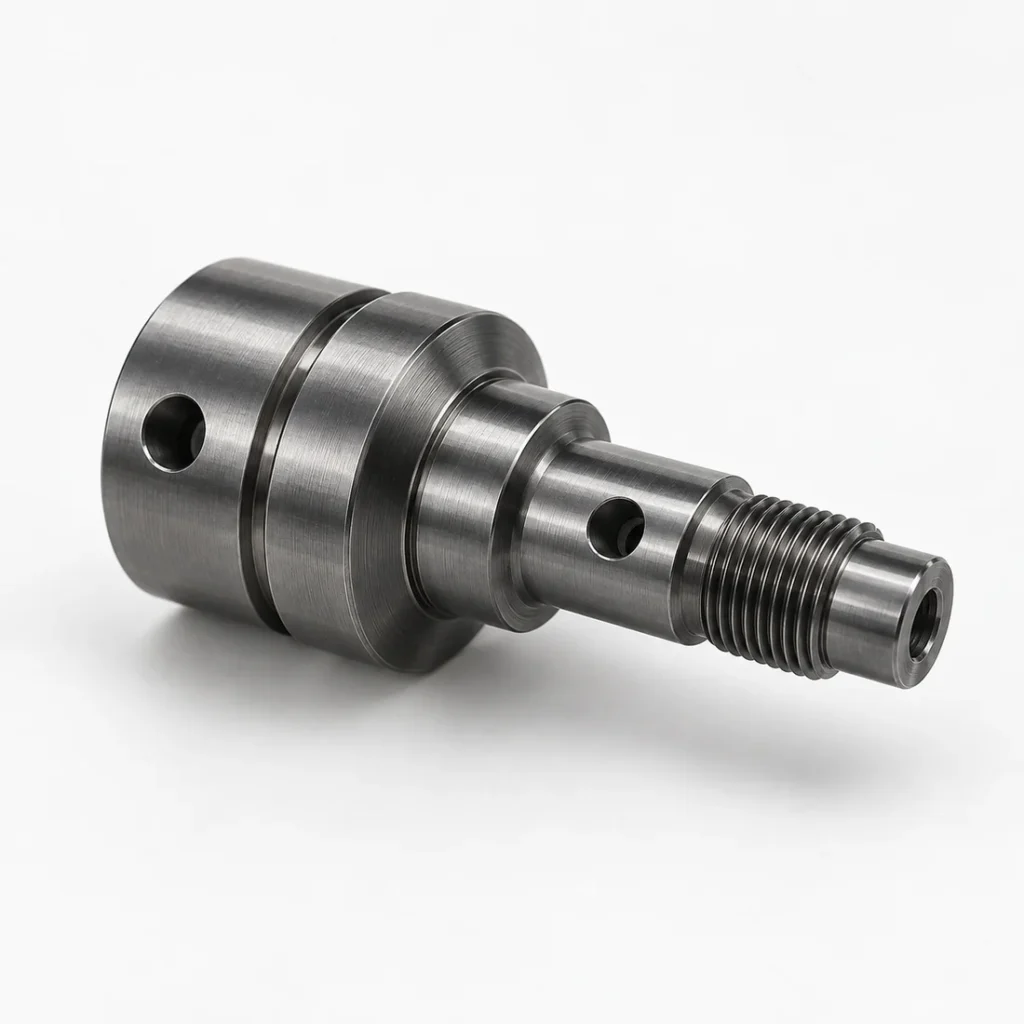
Define the condition before choosing tools or allowances. Use practical radii at shoulders, avoid abrupt section changes around heat-treated areas and identify surfaces that must be finished after thermal processing.
Geometry-specific decisions include stock allowance, support, cutter reach, burr control, thermal management and the point at which critical dimensions are verified. Share expected quantity and finishing requirements with the drawing.
Material selection guidance
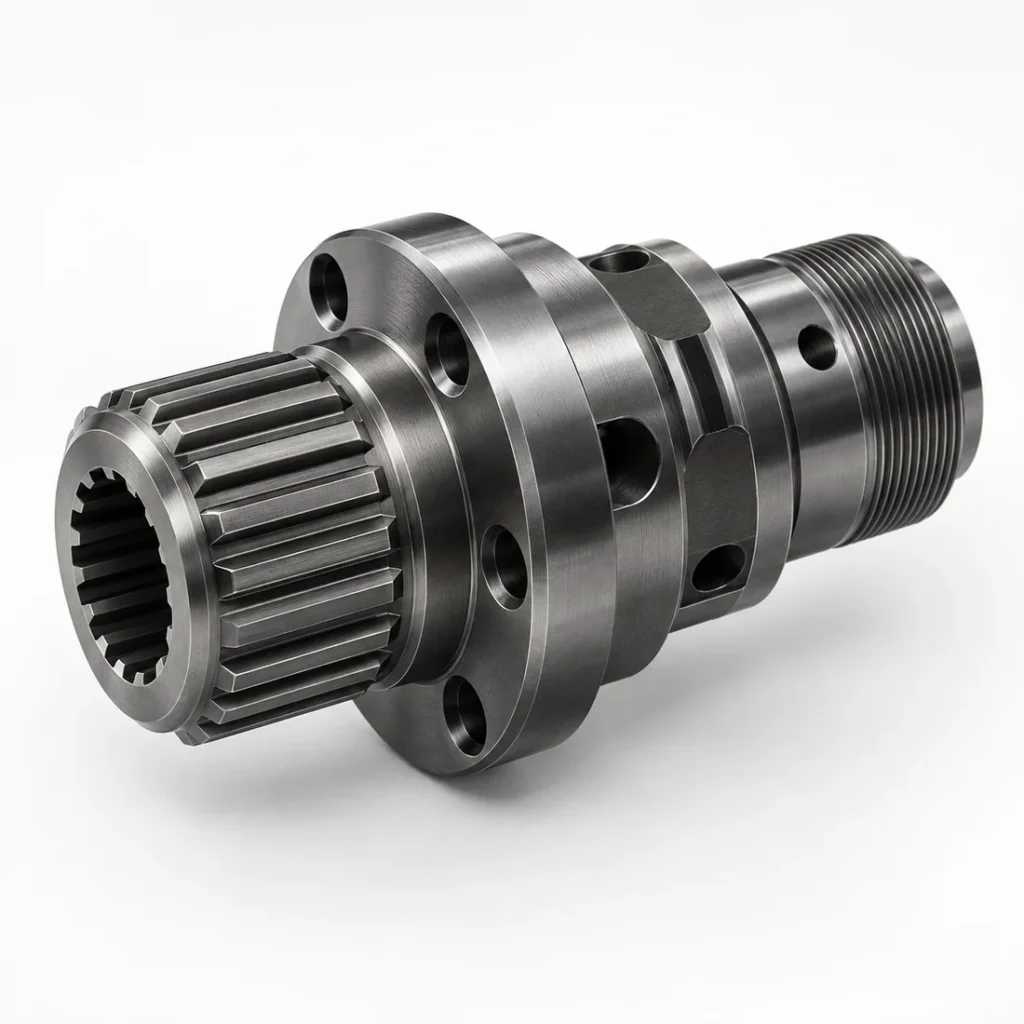
Choose grade 45 for cost-effective mechanical parts when heat treatment and corrosion protection are compatible with the design. Compare stainless steel for corrosion resistance and alloy steels for more demanding hardenability or fatigue needs.
If an alternative is acceptable, state the performance priorities instead of naming an uncontrolled substitute. Any alternative remains subject to customer approval.
Material and part gallery
Discuss 45# Steel for your project
Send the drawing, material standard, condition and quantity. AYBERK will confirm availability and provide a manual quotation.
Request a Quote