

Material grade · H59
Brass H59
Last updated October 12, 2026
General machining guidance for H59 copper-zinc brass, with composition, formability, finish and specification controls.
Overview
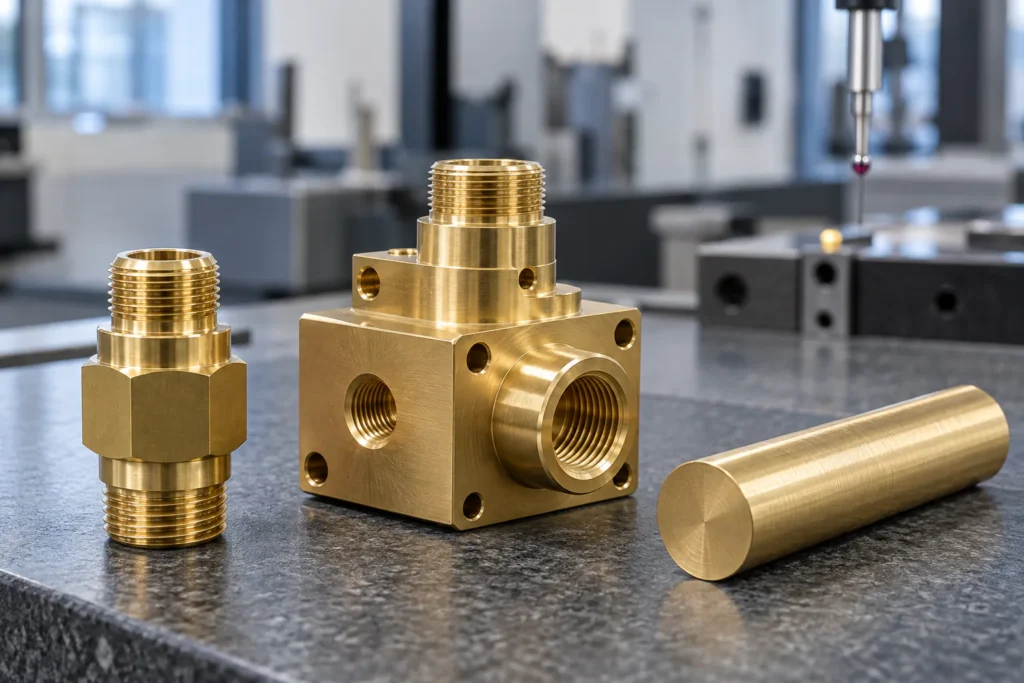
H59 is a Chinese copper-zinc brass designation containing nominally around 59 percent copper, with the balance principally zinc and controlled impurities. It is considered for fittings, hardware, decorative parts and selected electrical or fluid components where brass appearance, machinability and corrosion behavior are useful.
H59 product form and condition influence strength, ductility and cutting behavior. It should not be treated as identical to every international 60/40 brass. Procurement should follow the specified Chinese standard or an approved equivalence with certified chemistry.
Scope note: This article explains general material behavior. It is not a statement that every form, temper or grade is held in stock. AYBERK confirms sourcing, process capability and project requirements through manual RFQ review.
Material characteristics
Brass appearance
Provides a yellow metallic finish suitable for functional and selected decorative hardware.
Machining and forming balance
Behavior depends on condition, tooling and lead/impurity limits.
Environment-sensitive corrosion
Water chemistry and corrosive media should be reviewed for dezincification or stress-corrosion risk.
Technical properties
Use values only with the stated alloy condition, product form and source standard. Blank values are intentionally not inferred.
General properties
- DesignationGB/T 5231 wrought copper and copper-alloy grades, with the applicable product-form standard
- H59
- Reference condition / formConfirm on purchase specification and drawing
- Condition and product form must be stated
Physical properties
- Reference densityTypical handbook or supplier-datasheet value; not an acceptance limit
- typically about 8.4–8.5 g/cm³
- Physical-property interpretationUse the selected grade datasheet for design calculations
- Higher density than aluminum and useful conductivity, though lower than pure copper; dezincification risk depends on environment.
Mechanical properties
- Mechanical-property interpretationCondition, thickness and test method must be stated
- Strength and ductility vary with cold work, condition and section; use certified data for the ordered form.
Chemical / composition data
- Composition controlGB/T 5231 wrought copper and copper-alloy grades, with the applicable product-form standard
- H59 is a copper-zinc alloy whose copper content and impurity limits are controlled by the governing GB standard. Exact acceptance comes from the material certificate.
Machinability and process notes
H59 can machine effectively with sharp tools and controlled chip formation, but behavior depends on exact chemistry and condition. Clamping should avoid surface damage, while burr control is important on small holes, threads and thin edges.
Use supported features, practical thread engagement and radii at thin transitions. Keep cosmetic surfaces protected and avoid assuming electrical conductivity equivalent to pure copper.
Final feeds, speeds, tooling, coolant, workholding and inspection are process decisions made from the drawing and the verified stock. General guidance here does not replace a project-specific manufacturing review.
Typical applications
Fittings and hardware
Threaded bodies, bushings and mechanical hardware after environment review.
Decorative machine parts
Visible knobs, collars and trim with agreed finish standards.
Electrical / fluid details
Selected terminals or valve elements where conductivity and media compatibility are verified.
Surface finishing compatibility
Polished / brushed
Define direction, visual sample and protective handling.
Plating
Specify nickel, chrome or other system, thickness, masking and adhesion requirement.
As-machined
Protect from fingerprints and oxidation when cosmetic appearance matters.
Advantages and limitations
Advantages
Attractive appearance, useful corrosion behavior in appropriate environments and a practical combination of machining and forming properties.
Limitations
Not suitable for every water or chemical environment, cross-standard substitution is risky, and mechanical properties depend strongly on condition.
Design considerations
Specify H59 with standard, product form and condition. Identify pressure, potable-water, electrical or cosmetic requirements and any prohibited substances or coating needs.
Where properties are safety-critical, specify the governing standard, lot documentation and required test evidence. Dimensional and cosmetic requirements should be separated so they can be inspected at the correct production stage.
Material composition and specification
H59 is a copper-zinc alloy whose copper content and impurity limits are controlled by the governing GB standard. Exact acceptance comes from the material certificate.
Reference framework: GB/T 5231 wrought copper and copper-alloy grades, with the applicable product-form standard The purchase document and material certificate govern; this overview is not a certificate of conformity.
CNC machining recommendations
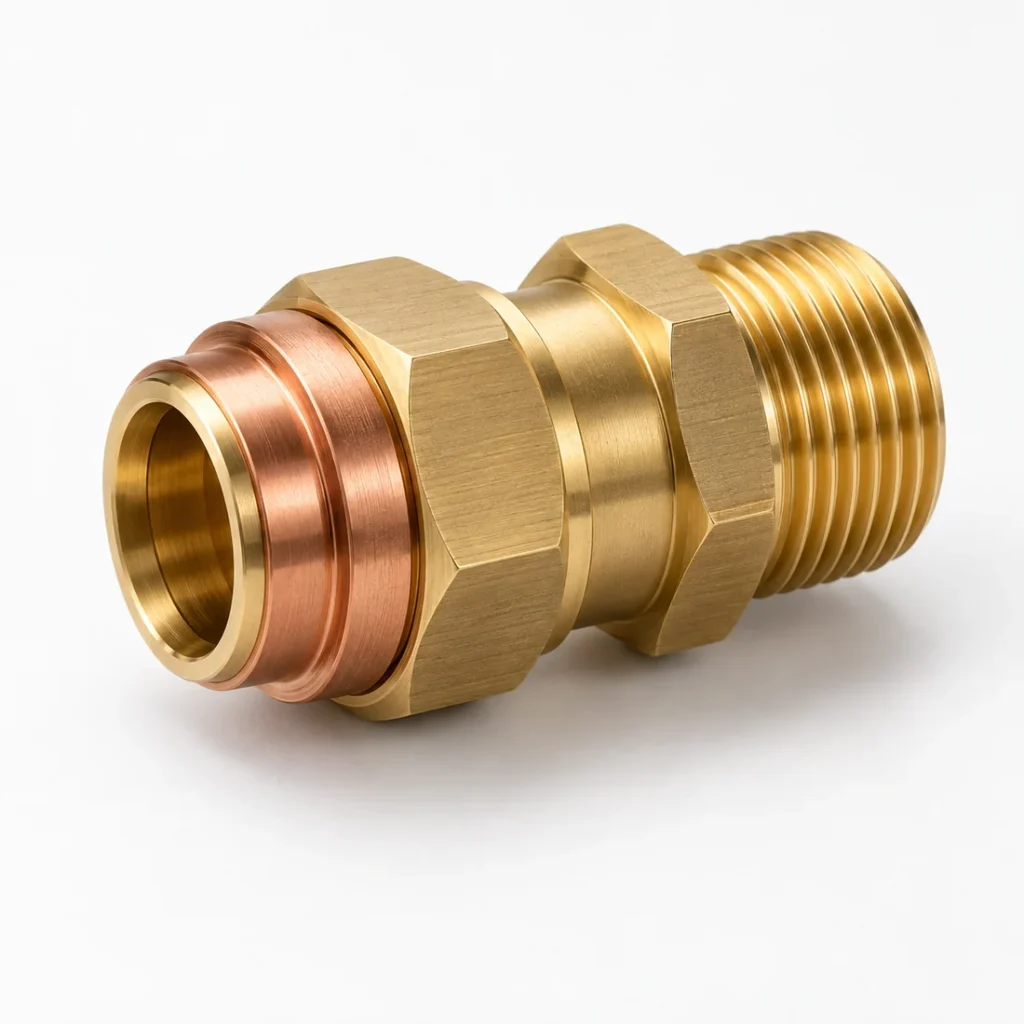
Use supported features, practical thread engagement and radii at thin transitions. Keep cosmetic surfaces protected and avoid assuming electrical conductivity equivalent to pure copper.
Geometry-specific decisions include stock allowance, support, cutter reach, burr control, thermal management and the point at which critical dimensions are verified. Share expected quantity and finishing requirements with the drawing.
Material selection guidance
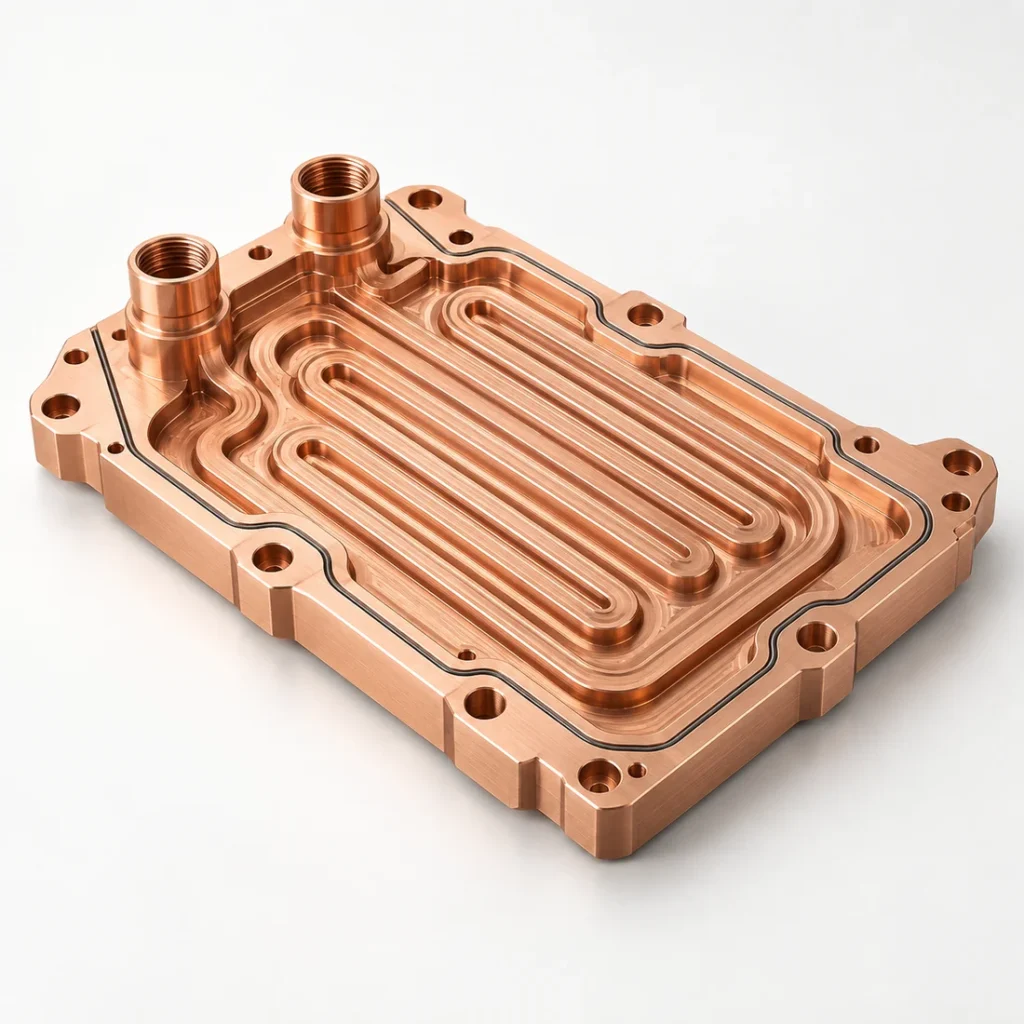
Choose H59 when brass characteristics suit the function and the environment is compatible. Compare T2 copper for higher conductivity and stainless steel for a different corrosion/strength balance.
If an alternative is acceptable, state the performance priorities instead of naming an uncontrolled substitute. Any alternative remains subject to customer approval.

Material and part gallery
Discuss Brass H59 for your project
Send the drawing, material standard, condition and quantity. AYBERK will confirm availability and provide a manual quotation.
Request a Quote